Thai Massage for Sciatica: How Stretching and Acupressure Can Ease the Pain
Sciatica has a way of making itself impossible to ignore. One moment you’re reaching for something or stepping off a kerb, and the next there’s a sharp, burning line of pain shooting from your lower back all the way down through your buttock and into your leg.

For anyone dealing with this regularly, the search for relief can feel relentless. Thai massage, a traditional therapy combining deep acupressure, assisted stretching, and work along the body’s sen energy lines, offers something that many conventional approaches miss: it treats the whole chain of muscles and joints contributing to sciatic pain, not just the spot that hurts.
Why Sciatica Is More Than Just Lower Back Pain
The sciatic nerve is the longest nerve in the body. It runs from the lower spine through the buttock, down the back of the leg, and into the foot.
When it gets compressed or irritated, the result is that sharp shooting pain, numbness, or tingling that most people would know straight away.
In many cases, the cause isn’t a disc problem at all. The piriformis is a small but strong muscle deep in the buttock. It sits directly over the sciatic nerve. When it tightens or goes into spasm, it squeezes the nerve and triggers all the classic symptoms.
This is sometimes called piriformis syndrome. It’s common in people who sit for long periods — office workers and long-distance drivers in particular. That matters, because targeted stretching and soft tissue work on the piriformis can produce real, lasting relief. This is precisely where traditional Thai massage comes into its own.
How Thai Massage Addresses the Root Cause
Thai massage, as practised at Glasgow Thai Massage, uses acupressure along the body’s sen energy pathways, rhythmic compression, and assisted stretching. Unlike a standard back rub, the work moves through the hips, glutes, hamstrings, and lower back — exactly the areas that drive sciatic pain.
Deep acupressure on the piriformis and surrounding muscles helps release the tight spots that cause the muscle to grip the sciatic nerve. The pressure eases these points and brings fresh circulation into the area. This reduces inflammation and supports healing.
Experienced practitioners work carefully around the sciatic nerve itself. The aim is to release the muscles compressing it — not to add more pressure to an already irritated nerve. You can book a session online to start addressing the tension behind your symptoms.
The Role of Assisted Stretching in Sciatica Relief
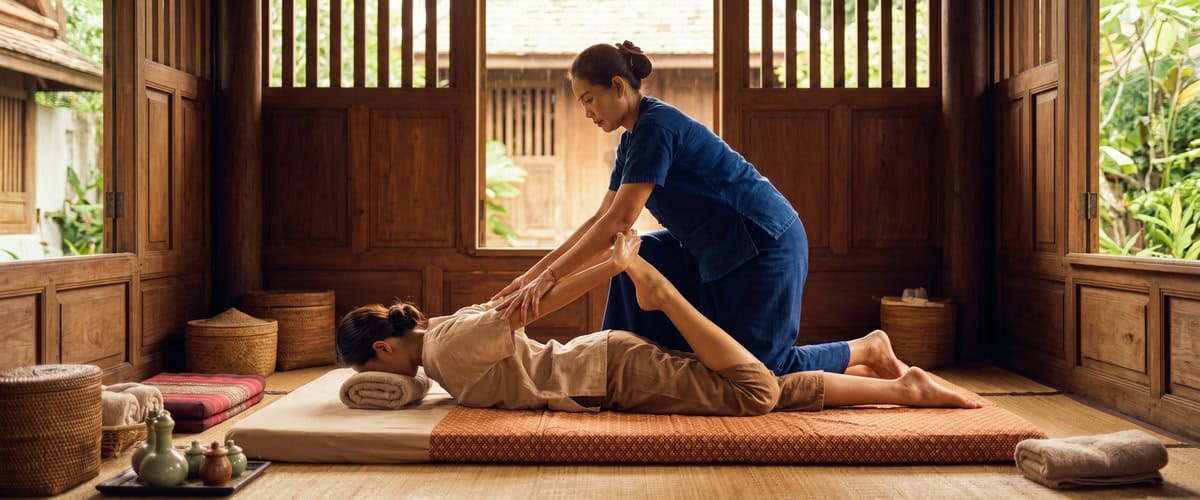
One of the defining features of traditional Thai massage is assisted stretching — often described as passive yoga. The therapist guides your body through deep hip openers, spinal rotations, and hamstring stretches. Most people couldn’t reach these positions on their own.
For sciatica, this matters a great deal. The piriformis responds well to targeted hip rotation stretches. Tight hamstrings pull on the pelvis and lower back, adding load to the structures around the sciatic nerve. Thai massage works through both at the same time.
This is also why results often feel more complete than foam rolling or static stretching alone. The depth and accuracy of assisted stretching reaches tissues that self-treatment simply can’t access.
What to Expect From a Session at Glasgow Thai Massage
A session focused on sciatica usually starts with a short conversation about your symptoms. Maliwan will ask what makes the pain worse and how long it’s been present. She is highly trained in traditional Thai technique, and this helps her shape the session around what your body actually needs.
The treatment is done fully clothed on a floor mat. You’ll move through a series of positions as the therapist works through compression, acupressure, and stretching across the hips, lower back, and legs. Most people feel a clear drop in tightness during the session itself, with further improvement in the days that follow.
For chronic or recurring sciatica, regular sessions tend to give the best results. A single treatment can bring real relief. But a consistent routine allows the muscles to release over time and the nerve to stay free of pressure. If you’re ready to try it, you can book your appointment online and check availability at our West Nile Street studio in Glasgow city centre.
Combining Thai Massage With Other Approaches
Thai massage works well alongside other forms of care. If you’re already seeing a physio or chiropractor for sciatica, regular massage sessions help by keeping soft tissue supple between appointments. Gentle movement, yoga, and an anti-inflammatory diet can also support recovery.
For those dealing with both muscular and nerve-related sciatica, a mix of Thai sports massage and traditional Thai technique can work well. Sports massage brings focused deep tissue work on specific muscles. Traditional Thai massage tackles the full-body tension patterns that often feed the condition. Read more about how massage therapy alleviates sciatica pain across different approaches.

If your sciatica is severe, involves leg weakness, or came on suddenly after an injury, get a medical assessment before booking. Thai massage is highly effective for muscular and tension-driven sciatica. But some causes need a doctor’s attention first.
Sciatica doesn’t have to be something you simply manage. With the right approach, the muscles pressing on that nerve can be released, the pressure relieved, and your movement restored. Thai massage — rooted in a tradition of working the whole body rather than chasing symptoms — is one of the most effective tools available for doing exactly that.